
I’ve said it before on here, but obscure players are always my favorite in team histories. And it doesn’t get more obscure than players who only played in one game for a team.
With that, I dedicated an evening to going through the entire history of the Pittsburgh Pirates (well, back to 1891, when they first played under the Pittsburgh name), looking for players who only played a single game for the Pirates.
Once I started to find some, naturally, I wondered if I could assemble an entire roster full of the most obscure Pirates ever. Sure enough, it was possible.
Then, after all that, as any completely sane person would do, I wondered if I could artificially create a baseball game using this roster.
Before I knew it, it was 4am and I was feverishly writing out an entire game log with a roster that spans over a century of baseball history within it.
So, with all that, welcome to the madness, I certainly hope you enjoy. Not every single player eligible made the team, but I tried to fit as many here as I could.
I’ll take you through a journey to meet the lineup I’ve assembled, and then we’ll play ball with this group of merry men.
Meet The Team
Rivington Bisland (1912): Playing for three teams in as many years, Rivington Bisland got his start in Pittsburgh with the Pirates. After his one and only with the Pirates, he played in 12 with the St. Louis Browns in 1913, and then in 18 with the Cleveland Naps in 1914 to close out his career.
Regarded as a good defender but terrible batter, we’ll have to hope that the defense outweighs the lapses on offense for him to succeed on this team.
Earl Blackburn (1912): Making his major league debut at the age of 19, Earl Blackburn was one of the youngest players in the league in 1912. Despite having just 71 games in his major league career, he bounced around a lot during that time. Six days after his Pirates debut, he was traded to Cincinnati. Blackburn also spent time with Boston and Chicago. He found a home for himself in Boston in 1916, playing in 47 games as a backup catcher.
Blackburn will serve as our backup catcher as well, a worthy understudy to Aubrey Epps.
John Bormann (2017): The most recent player to appear on this list, John Bormann’s career in the major leagues has one at bat to his name. A draft pick by the Pirates in 2015, Bormann had played seven games for Low-A Bradenton when he found himself at the right place at the right time. While the Pirates were in Miami, their starting catcher reported that morning with a foot injury. With all other catchers within the organization up in Pennsylvania, the Pirates gave Bormann, who was only on the other side of Florida, a buzz. He stepped in as a pinch hitter during the game, his only in the majors.
We will also use Bormann as a pinch hitter, and yes, we will make him drive all the way down I-75 before he bats.
Anthony Claggett (2009): A waiver claim by the Pirates at the tail end of the 2009 season, Anthony Claggeett arrived in Pittsburgh by way of New York. Earlier in the year, he made his major league debut for the Yankees, which sadly was an utter disaster. He made one more appearance months later, which went considerably better, but still saw him surrender runs.
He’s definitely a coin flip, but if we can get just one inning out of him, I think we’ll be alright.
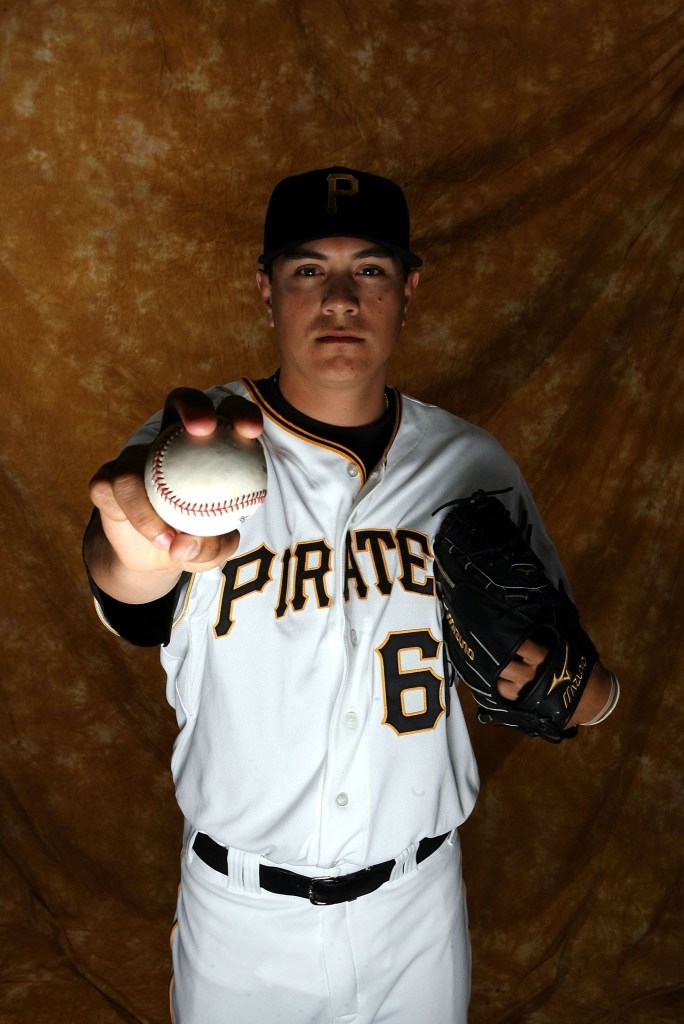
Onix Concepción (1987): Having played 389 of his 390 games with the Kansas City Royals, Onix Concepción brings experience as a World Series champion in 1985. After playing in Triple-A during the 1986 season, Concepción signed with the Pirates organization, where he ultimately came back for one last appearance in the major leagues. He came in as a pinch hitter, but his last at bat was indeed a hit.
Having experience playing multiple positions in the infield, Concepción’s versatility is very appealing, and will be very useful for our squad.
Tom Delahanty (1896): The second oldest of five brothers (who were all baseball players), Tom Delahanty never stuck around in one spot too long. Crazily enough, the Pirates are one of three teams that Delahanty only played one game with. He got his debut in 1894 with the Phillies, before also doing it with the Pirates in 1896 and the Louisville Colonels in 1897. The bulk of his playing time came with the Cleveland Spiders, in 1896.
A versatile man within the diamond, Delahanty provides us with several options as to where we can play him on the field.
Blaine Durbin (1909): Though he did not appear in either final series, Blaine Durbin was a two time World Series champion with the Chicago Cubs in 1907 and 1908, the first two years of his career as a big leaguer. The following season, the Cubs traded him as part of a package to acquire John Kane. He eventually found himself in Pittsburgh, where he played the final game of his career in the first ever game played at Forbes Field.
With experience in the outfield and in the playoffs, Durbin will provide us with some key leadership.
Aubrey Epps (1935): Acquired during the 1934 season, Aubrey Epps became a member of the Pirates organization but remained with his old team, the Birmingham Barons of the Class A Southern League. Under the deal, Epps would exclusively play as a catcher, and then report to the Pirates in 1935. He played the year within the minor leagues, but got his major league debut in the season finale. Though he would play several more years professionally, he never got back to the major leagues.
In accordance with the Pirates’ own deal regarding Epps, he will be our starting catcher, and play exclusively catcher for our team.
Reddy Grey (1903): Spending the vast majority of his career in what was then called the Eastern League, Reddy Grey’s one and only major league came with the Pirates. Reddy was the brother of famed author, dentist, fisherman, and fellow baseball player Zane Grey. The two were teammates in the Interstate League in 1895.
Grey had a lot of experience playing left field for the majority of his career, which is exactly where we’re going to put him.
Yamid Haad (1999): Born in Colombia, Yamid Haad made his major league debut as a pinch hitter for the Pirates. Though he never got any time playing his actual position, catcher, with the Bucs, he re-appeared in the major leagues six years later with the San Francisco Giants. There, he played in 17 games in a call-up stint, the final ones of his big league career.
Haad’s presence will be beneficial as we start to look up and down our bench for pinch hitters.
Newt Halliday (1916): Appearing in his one and only for the Pirates in 1916, Halliday’s career story is one that was potentially cut short. After the 1916 season, Halliday joined the United States Navy to serve during World War 1. During his training in 1917, he contracted tuberculosis, and had to fight for his life in military hospitals. During that fight, he also suffered pneumonia, which combined with tuberculosis, ultimately killed him in 1918 at the incredibly young age of 21.
Halliday will serve as good depth for us at first base, where we plan to platoon for the game.
Gary Hargis (1979): A second round pick by the Pirates in 1974, Gary Hargis spent five years working his way up in the minor leagues. After all that work, he finally appeared on a major league field, pinch running on the second to last day of the season. When he did step in, however, it was at a pretty crucial time.
Hargis will join a group of pinch runners in this game, because hey, you can never have too many.

Lloyd Johnson (1934): A veteran of the minor leagues, Lloyd Johnson played professionally for over a decade during the 1930s and early 1940s. Over the course of his career, he earned a major league shot just once, coming with the Pirates in 1934. In his early years, he was used solely as a reliever, however as his career went along, he tried his hand at starting as well.
With experience also as a closer, we’ll count on him to get the final three outs for us as the game gets down to the wire.
Hi Ladd (1898): Say hi to our lad Hi Ladd. With five major league at bats to his name, the first came with the Pirates back in 1898. After it, he was sent up to Boston, where he played in one more game (this one start to finish). While his major league stint may have been short, his career was the absolute opposite; Ladd played ball for 19 total years.
Ladd provides us an extra bat to use over the course of the game.
Bobby Lowe (1904): Our hometown kid, Bobby Lowe is the only player on this team to be born in Pittsburgh. He also has by far the most major league playing time of anyone on this team. A veteran of 1,821 major league games, Lowe made a quick stop for one single at bat for the Pirates in 1904. Shortly after, he was released and subsequently signed by the Detroit Tigers.
Lowe’s ability to play several positions will be very helpful for us, but with a solid outfield, we’ll need his services in the infield far more.
Dixie McArthur (1914): Oland Alexander McArthur is another member of this team whose one and only major league came in Pittsburgh. Nicknamed Dixie, McArthur closed out a game for the Pirates in 1914. In all, his career spanned five years, with his Pirates game coming right in the middle of it.
Though we won’t use McArthur as a closer, his closer mentality will help us lock down this game in the final innings.
Bill Miller (1902): Another member of this team that only played one career game, Bill Miller got to crack a major league lineup in a rare loss by the 1902 Pirates. Born in Germany, Miller made his debut at 23 years old.
Miller filled in well at right field, which is where he will play for us to help round out our outfield.
Cecil Neighbors (1908): Better known as Cy to some, Cecil Neighbors had a lengthy professional career. Though that only resulted in a few innings in the major leagues, he did achieve over a decade of playing time across various minor leagues.
Outfield depth is always a beautiful thing, and Neighbors will help us down the stretch.
Red Nonnenkamp (1933): Getting his major league debut in 1933, Red Nonnenkamp got the ever so slightest first taste of major league baseball with the Pittsburgh Pirates. Getting one at bat, Nonnenkamp didn’t see the bigs for another five years. In 1938, he turned up with the Boston Red Sox, where he put together a tidy three year run.
You can never have too many outfielders, which Nonnenkamp is. He will be useful depth for this team.
Wayne Nordhagen (1982): A mainstay in the lineup of the Chicago White Sox for several years, Nordhagen found himself in Toronto for the 1982 season. That season, his second to last in the major leagues, ended up being a rollercoaster for him. In June, he was traded from the Blue Jays to the Philadelphia Phillies in exchange for Dick Davis. Having spent only hours in Philly (and playing no games for them), the Phillies flipped him to the Pittsburgh Pirates to acquire Bill Robinson. Nordhagen spent a week in Pittsburgh, playing in one game for them, before was traded back to the Blue Jays in exchange for Dick Davis, the man he was originally traded for.
For our team, Nordhagen doesn’t necessarily bring a power bat, but he brings a consistent one, and gives us stability at the center field position.
Tony Ordeñana (1943): Nicknamed “Mosquito”, Tony Ordeñana also played just one major league game in his life, coming with the Pirates at the height of the Second World War. Though it was an incredibly short sample size, Ordeñana excelled both at the plate and in the infield.
Ordeñana played his one and only game at shortstop, which is where he’ll be for our team too.
Dave Pagan (1977): Playing his last major league game with the Pirates, Dave Pagan arrived in Pittsburgh by way of a trade from Seattle during the 1977 season. Hoping to rebound after a rough go with the Mariners, Pagan never fully got that chance. He pitched from the bullpen just one time in a Pirates jersey, unknowingly his last in the majors. Unfortunately for the Pirates, the player he was traded for, Rick Honeycutt, went on to have a 20-year major league career.
Pagan the Pirate was excellent, so he gets the start as we go through this game relying entirely on the bullpen.

Arch Reilly (1917): Another player who made his only major league appearance with the Pirates, Arch Reilly spent four years in minor leagues before finally getting a chance at a major league outing. A leader in more ways than one, Reilly wound up being the acting manager of the Wheeling Stogies, while also playing for them. He tried his hand at coaching in several other places after his time with the Pirates.
Though he will spend some time on the bench for us, Reilly’s presence as a leader is invaluable for a team that, by design, is very inexperienced.
Jim Ritz (1894): Born not far away from Pittsburgh (or even in the area depending on your source), Jim Ritz played his only major league game with the Pirates. Ritz then went on a tour of leagues across the nation, playing in the Western League in 1894, the Southern Association in 1895, and the Interstate League in 1896.
Ritz will provide us stability at the third base position, giving us a dependable player to cover the bag.
Ralph Shafer (1914): Having only appeared in the major leagues as a pinch runner, the vast majority of Ralph Shafer’s baseball action came in the minor leagues. While with the Pirates, Shafer appeared as a pinch runner during a 1914 game.
Shafer will be helpful to have in the dugout, and I’m sure will be waiting to get out there and run the bases.
Harry Sweeney (1944): Making his major league debut at the very tail end of the 1944 season, Harry Sweeney’s major league debut was a long time coming. After seven years in different minor leagues, Sweeney ultimately reached the top. Unfortunately, he would never make it back in the two years of play that followed.
With experience as an outfielder and a first baseman, we’ll opt to use Sweeney’s skills at first base.
Lou Tost (1947): Having pitched 38 games (23 starts) over his first two years with the Boston Braves, Lou Tost put his career on hold when he went to serve in the military during the Second World War. Giving “veteran” a whole new meaning in the sporting world, Tost attempted a comeback to the bigs after his years of service. That journey led him to one game back in the major leagues, with Pittsburgh in 1947.
Tost will be a valuable member of our bullpen, bringing experience as both a reliever and a starter. He’ll be counted on as we start to work through our relievers.
Coot Veal (1962): Winner of “Team’s Best Name” if I were giving out such an award, Coot Veal had a knack of appearing in several historical moments, including being the first ever batter of the Texas Rangers franchise (back when they were the Washington Senators). He was purchased from Washington by the Pirates ahead of the 1962 season, but by June of that season he was traded back to his debut team, the Detroit Tigers
Though he may have to play out of his natural position (shortstop), Veal was a naturally gifted defensive player, which gives me confidence that he can play elsewhere in the infield if needed.

Chris Volstad (2015): After several rough seasons with various teams across several leagues, Chris Volstad came to the Pirates hoping for just one more chance to prove he could still stick around on the mound. Volstad was waived by the Colorado Rockies midway through the 2013 season, and release by the Doosan Bears of the Korean League in 2014. Volstad performed phenomenally for the Pirates in 2015, but sadly for him, his one game wasn’t enough to keep him around.
Volstad will be a good reliever for us to help keep us in the game, and he will be counted on to pitch two innings for us.
Harry Wolter (1907): Playing for three teams in his first major league season, Pittsburgh was the second stop on Harry Wolter’s tour of the midwest. After being purchased by the Pirates from the Cincinnati Reds, he spent a few weeks in Pittsburgh before he was on the move again. In his one game with the Pirates, the team deployed him both as a hitter and a pitcher.
Since we have a very solid pitching staff, we’ll use Wolter’s experience at first base in a pinch when we need it.
Starting Lineup:
It took me a while to configure a full lineup. Many of the players on this team played only partially in their only game. Therefore, a lot of substitutions will have to be made as the game progresses, which is why the team has so many players on it.
After much deliberation with myself and all the voices in my head, this is the starting lineup that I’ve decided on:
- Wayne Nordhagen, CF
- Tom Delahanty, 2B
- Reddy Grey, LF
- Tony Ordeñana, SS
- Aubrey Epps, C
- Jim Ritz, 3B
- Bill Miller, RF
- Harry Sweeney, 1B
- Dave Pagan, RHP
And that’s the team folks! Now let’s head over to Forbes Field for the game.

 Fifth Avenue Sports
Leave a comment