Despite what they might have hoped, the third season for the Allegheny City baseball club did not serve as a bounce back year.
After going .500 in their first season, the Alleghenys fell apart in 1883, when they went through three managers, two ballparks, and a whole lot of losing streaks en route to a 31-67 season.
You couldn’t be blamed if you thought that things couldn’t really get worse for the Alleghenys, but this 1884 squad found a way to do just that.
First, let’s take care of some league business:
- The American Association is up to 12 teams. The AA has welcomed the Toledo Blue Stockings, Brooklyn, Indianapolis Hoosiers, and Washington Nationals
- The Nationals would fold halfway through the season, and be replaced by the upstart Richmond Virginians. That team would include several ex-Nationals players on the team
- St. Louis has readopted “Browns” as their team name
- 1884 marked the first time the AA league champion met the National League champion in a very early version of the World Series
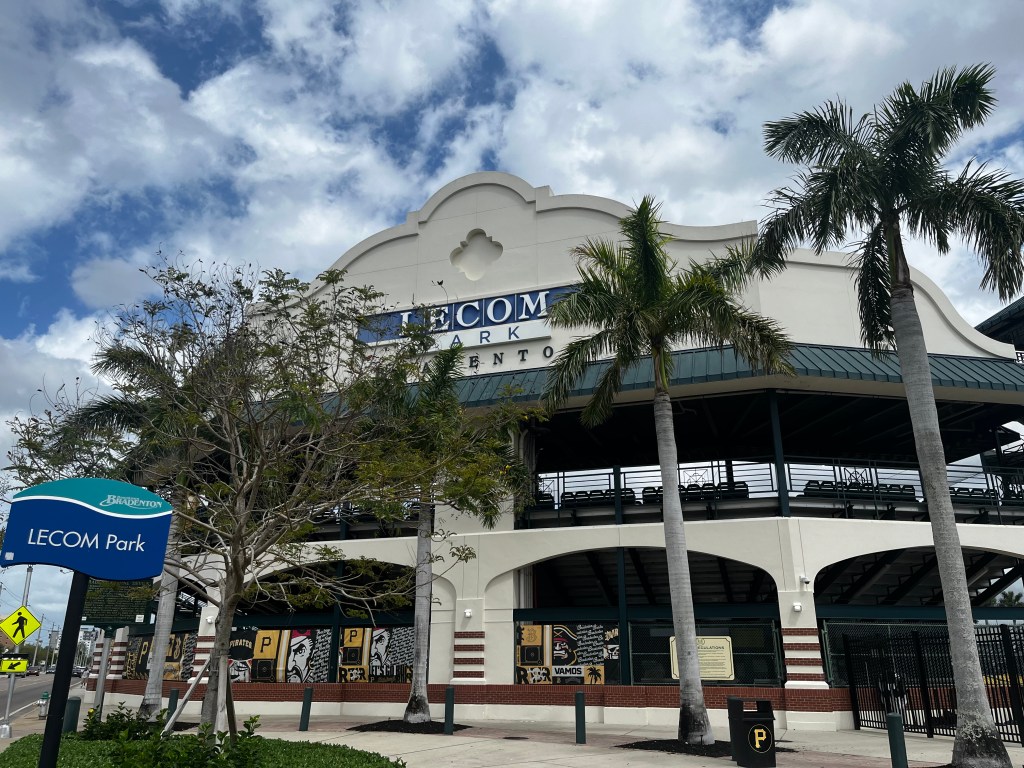
Closer to home, Allegheny City was gearing up for their third season in as many ballparks. After playing in Exposition Park I in 1882 and starting 1883 in the newly built Exposition Park II before returning to the original, the Alleghenys moved to Union Park for the 1884 campaign.
Flooding was still a prevalent issue at Exposition, and the team hoped that conditions would be drier at Union Park.
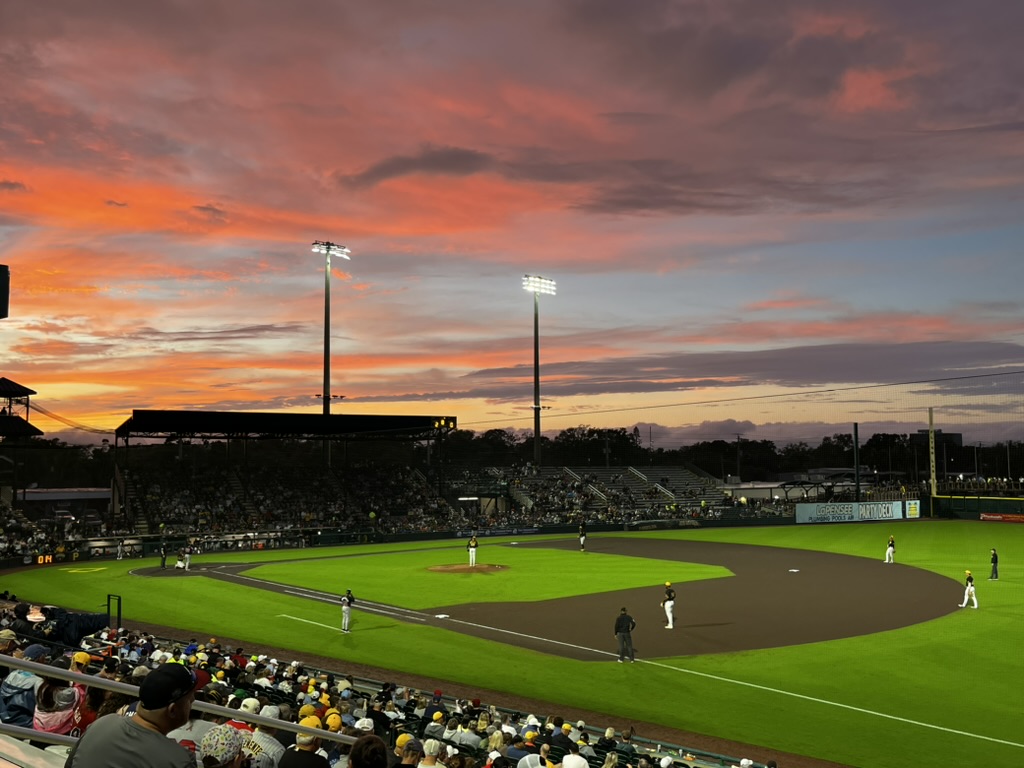
Union Park’s baseball days are clouded in mystery; though it would be the team’s home for several years, photographs of the park from when it was primarily a baseball stadium are incredibly rare.
Equally rare at the ballpark that year was winning. The 1884 Alleghenys had a very trying season, but that didn’t account for much of anything as poor play and an unstable managerial situation rocked another season.
Help support the Fifth Avenue Sports publication!
Make a monthly donation
Make a yearly donation
Choose an amount:
Or enter a custom amount
Contributions help ensure that Fifth Avenue Sports can continue to survive and grow in the sports media realm. I cannot possibly thank you enough for your support and generosity in supporting my work!
Your contribution is appreciated.
Your contribution is appreciated.
DonateDonate monthlyDonate yearlyWhile most of the team’s better bats did return from 1883, a lot of them failed to replicate their success. Power batter Mike Mansell’s batting average dropped over 100 points, infielder George Creamer fell from .255 to .183, and the team as a whole only slammed a pair of home runs all season.
The team also suffered some pitcher departures, when the team sold pitcher Bob Barr to the upstart Washington Nationals. He would be the team’s best pitcher before they folded during the season.
After having three managers last season, Denny McKnight took over as the team manager to start the season. McKnight, who was involved in the original founding of the team, became the first of several managers the team would have in 1884.
Allegheny City started their season with back to back brutal losses against Philadelphia. A 9-2 season opener was followed up by an 11-2 loss before the Alleghenys finally won 9-8.
However, they were promptly swept by the New York Metropolitans, who would prove to be a bad matchup for the Alleghenys. In ten games against the Metropolitans that year, Allegheny City only won once, in a 1-0 game in the dead of August.
Despite the early sweep, the Alleghenys turned around and swept Brooklyn, but in another series against New York, Allegheny City was swept again.
That sixth loss vs the Metropolitans marked the end of McKnight’s managerial tenure. His 4-8 record stood as his only time being a major league manager.
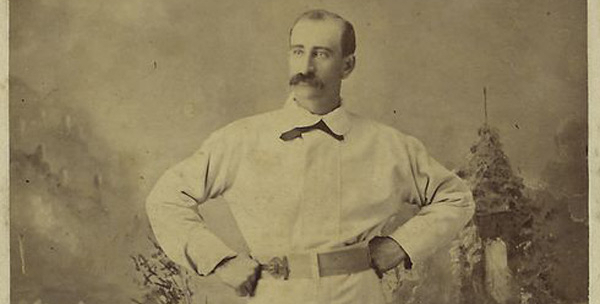
In his place, Bob Ferguson was named the new manager. Ferguson had an illustrious résumé at the time he became the skipper in Allegheny City; he had managed over 900 games for seven teams dating back to 1871 when he took over.
Ferguson was a player-manager for the Alleghenys, though the utility man only appeared in 10 games, batting .146.
However, he also had a bit of a notorious reputation. He was known as a dictator, and often was accused of being an overbearing leader, which divided the teams he managed and led to bickering amongst his players.
No matter how good or bad a Ferguson-managed team was performing, the Brooklyn native was never afraid to berate any player who made an error, and often erupted into profanity-laced rants about the players under him.
It was a management style that was very controversial and often led to players asking to be released from teams he managed.
I can only imagine that several of those rants took place as the Alleghenys were swept in two of the first three series that Ferguson oversaw, once by New York and another by Philadelphia.
By the time May was over, Allegheny City was already in the hole at 8-15, but as bad as it was, June was so much worse.
The Alleghenys did not win a series that month, and June only saw them win four games as things imploded on and off the field. A five-game losing streak and an eight-game losing streak both occurred during that month as Allegheny City would be swept three times in 20 total games.
The team released underperforming outfielder Mike Mansell on June 13th. Mansell had three triples and a home run, but in 27 games he was batting just .140. It wound up being the worst batting average on the Alleghenys that season among players with at least 20 games.
In another move, the Alleghenys signed outfielder Jimmy Woulfe on June 22nd. Woulfe was arriving from Cincinnati, where he struggled at the plate but had limited action. However, things did not improve for him in a new town; his .143 average in Cincy only got worse in Allegheny City. This was his only season of major league play.
Any hope at a turnaround looked bleak when June started, but was flat out impossible by the time it ended.
The Alleghenys entered July at 12-31, and their second managerial change was soon to come. After following up their horrific June with a 2-7 start to July, Ferguson was out as manager. Joe Battin, who also filled in as manager in a pinch down the stretch last season, reassumed the role.
Battin may have not been having a great year, carrying a .177 batting average in 43 games this season, but under his leadership the team was actually respectable.
July also saw the start of a lot of player turnover for the Alleghenys; the team released first baseman Jimmy Knowles, pitcher Frank Beck, and outfielder George “Live Oak” Taylor.
The Alleghenys would have a very odd relationship with old Live Oak in July, however. Like a failed teenage romance, the Alleghenys and Live Oak were together, and then not, and then together, and then not.
The team released him on July 10th, before re-signing him on approximately the 25th (the exact date is uncertain). That lasted a full six days before he was released again on approximately the 31st.
Meanwhile, Joe Battin’s time with Allegheny City was coming close to an end too. The team went 6-7 in games Battin managed, but maybe that was too much success for the Alleghenys, who decided to try out fellow player George Creamer as a manager as well.
Creamer, now the team’s fourth manager, lasted eight games as manager starting on August 1st, during which the team went 0-8.
Battin was released on August 9th, and went on to briefly manage the Pittsburgh Stogies of the Union Association.
August also saw the release of outfielder and pitcher Chuck Lauer, who did not necessarily excel at either position for the Alleghenys.
After the second baseman Creamer’s manager tenure ended, the team brought in Horace Phillips to finish the year. He had been the skipper of the AA’s Columbus Buckeyes the year prior.
Philips is an important name to remember as we go through the years. He brought the stability that the Alleghenys desperately needed at the helm, and managed the team for several seasons.
It wasn’t easy early on though.
On the field, the team suffered an eight game losing streak in early August, and over the course of the month they went 3-14-1, with that tie coming against the newly formed and very creatively named Richmond Virginians, who had taken the place of the folded Washington Nationals.
After dropping three to Richmond to open September, the Alleghenys embarked on an 11-game road trip that saw them go 3-8. In their first game upon returning to Union Park, the Alleghenys forfeited their game to the visiting Baltimore Orioles for unknown reasons. It was the first forfeit in franchise history.
They did finish September by sweeping Indianapolis, but the good times ended there. Their final win came on October 1st against St. Louis, before going 0-8-1 to mercifully end the year.
Towards the end of the season, several other players left the sinking ship; left fielder Conny Doyle, utility man Charlie Hautz, and pitcher Bill Nelson were all released. Each of them had played sparingly for the team.
Allegheny City finished the season 30-78-2, which was 11th place in the American Association. The Alleghenys only outperformed the Indianapolis Hoosiers. However, if you still count the folded Washington Nationals, then Allegheny City beat them too.
Third baseman Art Whitney and left fielder Conny Doyle both had terrific averages, but they both played under 25 games. In fact, only one playr in Allegheny City’s top ten in batting average had played more than 35 games,.
Therefore, the de facto batting average title in Allegheny City once again belonged to Ed Smartwood. Now 25 years old, Smartwood batted .288 in 1884 for the Alleghenys, notching 19 doubles and 6 triples along the way. He also led the team in walks with 33, living up to his name.
The second place batter who played with any kind of regularity was shortstop Bill White, who recorded a .227 average and hit a team leading 10 triples.
In all, the Alleghenys had cycled through 34 batters during the season, which was one behind Indiana. Nobody else in the AA had used more than 25.
On the mound, Jack Neagle had the best season of the bunch. Neagle tossed 326.0 innings for the Alleghenys, recording a 3.73 ERA. He and Fleury Sullivan did the vast majority of the pitching for Allegheny City this year; though the team had eight other people pitch for them, none of those players pitched more than 30 innings, with the exception of John Fox, who threw 59.
Here’s a full look at the roster:


The Allegheny City roster experienced a ton of turnover during the course of the season, and a lot more would happen before this team would take the field again.
However, that’s a discussion that will have to wait until next time.
(Featured photo of Bob Ferguson, taken by an unknown author)


 Fifth Avenue Sports
Leave a comment