
This Pittsburgh Penguins season is going to be weird, man.
A lot has changed since the last time we saw the Penguins take the ice in a game that counted.
They revamped nearly their entire coaching staff, including their first change at head coach in ten years. Dan Muse, a first time head coach in this league, brings with him a change in philosophy for the Penguins and hopefully, a more concise effort on the younger talent this organization currently has, and the more of it they will acquire in the coming years.
After finishing last season 34-36-12, the Penguins also made a decent amount of changes to the roster, but none of them were radical. Their strengths are still their strengths, and their weaknesses are still their weaknesses.
It all leads to a very interesting offseason to look back on (especially when you consider the moves that weren’t made), and a very interestingly constructed team that will travel to New York for a meeting with their ex and the Rangers on Tuesday.
But of course, we can’t ignore what awaits us next summer. Gavin McKenna, who will spend his season playing just a few hours down the road in Happy Valley, will await the winner of the 2026 NHL Draft Lottery.
Tanking in the NHL is far from a certain, just ask the Buffalo Sabres. Even if you finish in the basement of the league, the highest odds you can achieve for the first overall pick are 25.5%. Those aren’t the kinds of odds you feel great about, especially when it involves throwing a whole season towards it.
It’s a lottery, however, that the Penguins stand a decent chance to make a play for.
Their goaltending, for yet another year, is a huge question mark, with Tristan Jarry and Arturs Silovs opening the year as the team’s tandem in net.
Silovs has some potential, for sure. Last season, he backstopped Vancouver’s AHL team all the way to a Calder Cup championship, where he was named playoff MVP and had a a .931 save percentage and 2.01 goals against average for the Abbotsford Canucks. He’s also already confirmed as a goalie for Latvia in the upcoming Olympics.
But at the NHL level, he’s still relatively unproven. Over parts of three seasons and 19 total regular games, Silovs has a .880 save percentage and a 3.13 goals against average.
You might best remember him, however, for his Stanley Cup playoff run with Vancouver two years ago, when he started ten games filling in for injury as a 22-year-old and recorded an admirable .898 save percentage and 2.91 goals against average.
But there’s still more we need to see from Silovs before we can declare him a surefire NHL goaltender.
His other half in net, Jarry, doesn’t exactly inspire confidence either. The $5.375 million dollar man spent a chunk of last season in the AHL after he was waived by the Penguins, who hoped for him to rebound down in the minor leagues.
Jarry toiled in the AHL for a month early in the year, posting a .908 save percentage and a 2.67 goals against average in 12 games before he was recalled. Overall, his NHL season last year saw him play 36 games and record a .892 save percentage with a 3.12 goals against average. Surprisingly, though, Jarry did finish with a 16-12-6 record, which is not bad considering his numbers.
For whatever personal challenges those two netminders have, however, they won’t be receiving much help in front. Pittsburgh’s defense this season is maybe a goalie’s worst nightmare.
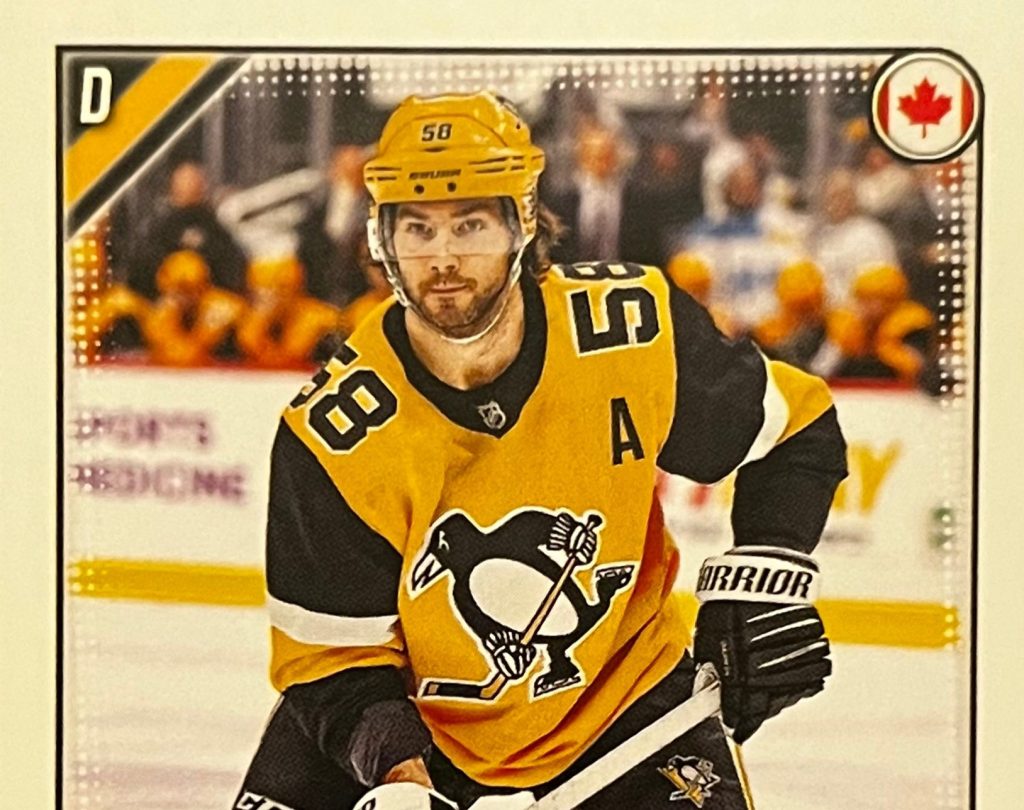
Though the blue line is still headlined by Kris Letang and, oddly enough, Erik Karlsson, neither one of them will do much to elevate the defensive play of the unit as a whole.
Karlsson’s best contributions will still come in the other team’s zone (he finished fourth on the team with 53 points last year), and Letang, for as much as he is still loved, is not the player he once was.
Those two will combine with offseason additions like Matt Dumba and Connor Clifton, two players who the Penguins had to be paid to take on. Neither one of them were praised for defensive capabilities in Dallas and Buffalo, respectively, last season. Throw in some questionable depth and those pairs are going to struggle quite a bit.
But here’s where things get weird with this team. Yes, the goaltending is unproven and the defense is shoddy, at best. But their forward corps might honestly be the best they’ve iced in three years.
They still have Sidney Crosby, who has recorded three straight 82-game, 90+ point seasons. It’s still not the best idea to bet against Crosby, and he’s showing absolutely no signs of slowing down. It goes far beyond just Crosby, though.
At least to start the year, they also still have both Bryan Rust and Rickard Rakell, two very capable top-six wingers who the Penguins were thought to be trading in the summer…because, you know, they’re good. Rust is slated to miss the first few weeks of the year with injury, but it doesn’t appear all that long term.
The rest of that group doesn’t look all that bad either. Evgeni Malkin is still a productive center in the NHL, and recent additions like Anthony Mantha and Tommy Novak can round out the middle six.
This team will also feature the first real young talent the Penguins have had in years.
Ville Koivunen, after getting a taste of the NHL this season, will now start the year in Pittsburgh. He could be primed for a big opportunity in the top six this season.
On the blue line, Harrison Brunicke, a second round pick from last year, will also start the year in the NHL. He has a legitimate claim to be one of their better defenseman already.
Much more surprisingly, though, forward Benjamin Kindel has made the team out. The 18-year-old was the 11th overall selection in this summer’s draft and turned a lot of heads in training camp. He’ll be the first Penguins draft pick to start in the NHL in the first season after his draft since Jordan Staal all the way back in 2006-07.
Even though Kindel is likely only here on one of those nine-game trials, the fact that he was able to make the roster at all at his age looks like a pretty good endorsement of the pick.
Rutger McGroarty, who unfortunately will start the year injured, figures to eventually join that group as well under a new head coach that looks to prioritize youth and development far more than his predecessor.
Here’s where the worry comes in: they look almost too “middle of the pack.”
Their forwards will keep them competitive in a lot of games, but their defense and goaltending can’t be trusted to get them very far. The worst position to be in the NHL is a team that is constantly drafting at or around the ten spot.
This is the kind of year where, if you don’t think you can make the playoffs, you should try and bottom out. Crosby obviously wants to make the postseason, Dubas doesn’t seem nearly as keen on it.
The result, at least on Opening Night, is a roster that doesn’t look fully capable of accomplishing either mission.
A lot can change, obviously, between now and January, let alone by April when the playoffs and draft lottery roll around. But this team, the way it is constructed for Opening Night, still has a lot of questions surrounding what direction they want to go in.
Their start could mean everything. If they start out slow and sluggish, the sell-off of guys like Rust, Rakell, Karlsson, and maybe a few others could kick off fairly soon. That’s the main aim for Dubas, and honestly, it’s in the best interest for the long-term health of the organization.
However, if this plucky mix of veterans, kids, and “prove it” guys get off rolling early on…well then things do get slightly more interesting, don’t they?

 Fifth Avenue Sports
Leave a comment