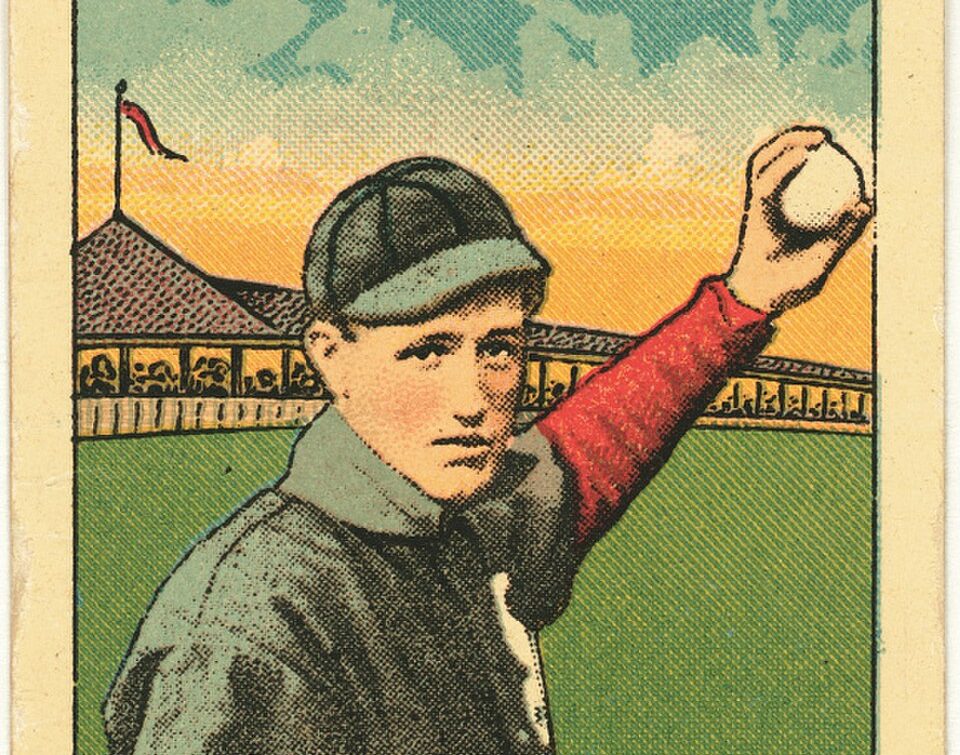
The Hawaii Islanders represented the Aloha State for a quarter century, and brought an exciting new wrinkle to the realm of organized baseball starting in 1961.
But for all the interesting and underrated baseball lore that comes from the 50th and most recent state admitted into the union, it’s important to realize that the biggest body of the great American pastime took decades to really make its impact in the region.
The story of how the Islanders eventually arrives on the shores of Honolulu actually starts decades back in the mainland, in 19th-century California.
Back in 1883, the first baseball team in the area sprung up in Sacramento as a member of the California State League. The early years for almost any new baseball team at that time was rocky; loosely strung together leagues were hanging on by a thread, putting both themselves and the teams that played in them in a constant battle for survival.
Sacramento was no different, briefly moving around the west coast for homes before resettling in California’s capital. In 1903, the team became inaugural members of the Pacific Coast League, an early six-team variant of the top minor league that still exists today. That era of the Sacramento team would continue to bounce around leagues, before ultimately stumbling over to San Francisco and being sold to Salt Lake City for the 1915 campaign.
Three years later, after Portland dropped out of the PCL, a new Sacramento club was founded and slotted into the league. Originally named the Senators, Sacramento operated as an independent club for years before they were purchased by the St. Louis Cardinals after the 1935 season. Renaming the team the Solons (a slang term for a politician or senator, dating back to the days of ancient Greece), Sacramento represented one of nearly 30 teams under the umbrella of St. Louis and general manager Branch Rickey.
Rickey, who’s best known for signing Jackie Robinson in 1947, is also credited with creating the modern player development system and the organization of teams in different circuits.
It was during their affiliation with St. Louis that the Solons won their first (and only) PCL title in 1942. That affiliation lasted until 1944; then in 1950, they picked up a two-year agreement with the Chicago White Sox, and operated as an non-affiliated team for most of the decade.
As baseball grew in popularity on the west coast, that new market eventually drew the relocation of major leagues teams like the Brooklyn Dodgers to Los Angeles and the New York Giants San Francisco in 1958. The arrival of pinnacle teams drove away some of the successful minor league clubs in the area, and eventually spelled the end for our friends in Sacramento.
Before play began in 1959, a proposed sale was in the works to send the Solons to Edmonton. Sacramento was looking to get out, the potential buyer up north held off the deal for at least a year.
Interest in the Solons was led by John Ducey, general manager of the Edmonton Eskimos. Ducey had helped lead the revival of Edmonton’s ballclub back in 1946, when he and several other business partners leased Renfrew Park and assumed operations of a three-team league in the area. As they got their legs back under them, Ducey and Co. searched for leagues to play in.
At their peak, they were prominent members of the Canadian-American Baseball League, where Edmonton were league champs in 1957. But the league was shaky, and within a few years it would fall, leaving Ducey without a team.
In 1959, Ducey was interested in Sacramento, but ultimately declined. He cited the need for renovations at Renfrew Park, and used the sale to advocate for a longstanding cause of his: Sunday baseball. But the biggest sticking point was money, and his hesitancy to get involved with a team that did not have additional financial capital from a major league parent club.
“In the meantime, Sacramento has little to sell us,” Ducey said. “It is the only independent club in the Coast League. We must have a working agreement with a major league club.”
Ducey left the door open for a purchase in 1960, but the Solons ultimately remained in Sacramento for another two years. After the 1960 campaign, the “for sale” sign was back up on the Solons, and this time, they were able to find a deal.
Businessman Nick Morgan Jr. bought the club and made the bold choice of relocating the Solons to Honolulu, where they would undergo a full rebrand from the Sacramento Solons to the Hawaii Islanders.
“It was crushing for everybody,” Sacramento baseball historian and author Alan O’Connor said.
In Hawaii, the Islanders moved into the area’s only prominent sporting venue, Honolulu Stadium. On the corner of King and Isenberg Streets, the “Termite Palace,” as it would eventually come to be known due to the termite problem the wooden structure endured, would host the Islanders from their inaugural year until 1975.
The Islanders would give Honolulu a representative in America’s pastime, and their first professional baseball team to call their own. One could also argue that the relocation instantly gave the Islanders the best home-field advantage in the PCL, dragging other Coast League clubs across the Pacific Ocean to play them.
Meanwhile, the departure of the Solons would leave a hole in the Sacramento community until 1974, when the team made a brief return in a reanimated form.
And they established quite the history for themselves well before the Pittsburgh Pirates got involved.


Leave a Reply