Whether you’re a prospect, journeyman, or recently-demoted player, the dream of nearly everyone playing Triple-A ball is to get the call to the major leagues.
And even in years where the big-league club is terrible, players still want that promotion, that paycheck, and that path to proving or re-proving themselves on baseball’s biggest stage.
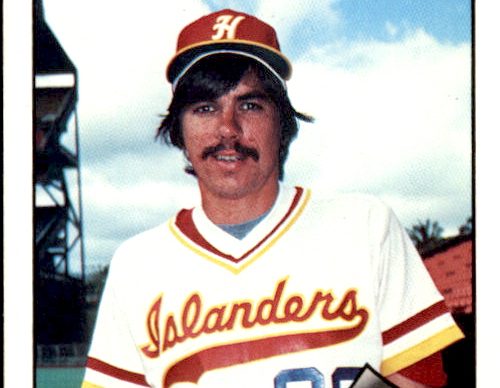
However, that’s not to say there weren’t benefits to playing most of your 1985 season in Hawaii. Even if Aloha Stadium, home of the Triple-A Islanders, was a little out of the way of Honolulu, playing on Oahu provided a scenic scape unlike anywhere else in the sport.
Hawaii was also the only opportunity to win at any level within the organization of the Pittsburgh Pirates.
The 1985 season was a disaster for nearly every level of baseball within Pittsburgh’s system. The parent club had put together one of the worst seasons in their century-long history, going 57-104 to tie their third-highest loss total and a top-ten losing percentage, dating all the way back to their time in Allegheny City in the late 1800s.
And that losing feeling had spread throughout the system. Pittsburgh’s .354% winning percentage bested only both of the team’s Short-Season affiliates. In the Gulf Coast League, the rookie-ball Pirates went a horrid 15-47 (.242%) for last place.
The Watertown Pirates performed better, but only by the thinnest of margins, also finishing last in the New York-Pennsylvania League at 22-54 (.289%).
In full-season ball, the Macon Pirates finished a very poor 56-82 (.406%), and the Prince William Pirates went 65-74 (.468%). In Double-A, Nashua’s club also finished below .500, but were the best of any non-Hawaii club at 66-73 (.475%).
The Islanders were the only team inside the whole organization to finish with a winning record in 1985. And not only did they best their organizational counterparts, they dominated with a 84-59 record and a .587% winning percentage.
Now in their third year of their affiliation with the Pittsburgh Pirates, Hawaii was looking to get back on track after suffering an embarrassing defeat at the hands of the Edmonton Trappers in last year’s Pacific Coast League finals.
Edmonton, who had finishing the entire regular season with a losing record but was able to take advantage of their incredibly weak North Division to punch a ticket to the postseason, had swept Hawaii in a three-game series that was shortened by rain. One of the best seasons in franchise history had ended with a stunner of a loss, but it prompted the Honolulu ballclub to try and get back to that final in the 1985 season.
Part of the challenge for Hawaiian manager Tommy Sandt was to do that without some of his most talented players from the 1984 season. At the winter meetings, the Pirates had traded lefty starter Alfonso Pulido to the New York Yankees as part of a five-player deal.
Pulido was Hawaii’s innings leader in 1984 and was credited for 18 wins and a 2.54 ERA. Without him, Sandt turned primarily to a former big-leaguer who was looking to re-prove himself in Bob Walk.
Winner of the 1980 World Series in his rookie year in Philadelphia, the right-hander was traded to Atlanta for left fielder Gary Matthews, who provided the Phillies with some stable batting in exchange for the young Walk.
Down south, Walk struggled to establish himself with the Braves, and four years later he was released by Atlanta in spring of 1984. Pittsburgh picked him up and stashed him in Hawaii, where he rebounded during his first year with the Islanders before really taking the reigns in 1985.
Far and away the innings leader in Hawaii that year, Walk amassed a 2.65 ERA, 1.179 WHIP, and 2.03 strikeout-to-walk ratio through 173 innings. Walk pitched a complete game in half of his 24 starts, often giving the bullpen an extra day to rest when he took to the mound.
Walk would get a quick look with the Pirates in 1985, but his Triple-A work over the last two years would propel him back into a full-time MLB job starting in 1986 in Pittsburgh.
Aiding Walk in the rotation was righty Manny Sarmiento. Like Walk, Sarmiento had a World Series ring to his name, winning with the Big Red Machine in Cincinnati in 1976. Sarmiento’s career had been hampered by arm injuries; he underwent surgery in 1980 and was sold to the Pirates at the end of 1981.
Used as both a reliever and a start in 1982, Sarmiento threw a career-high 164.2 innings that season before converting back to a full-time reliever in 1983. Unbeknownst to him, that was his last work in the major leagues; a second arm surgery took out his 1984 season, and by the time he was healthy again he was sent to Triple-A Hawaii.
Back as a starter, Sarmiento threw 107.2 innings for the Islanders and solidified a starting job with a 3.18 ERA, 1.235 WHIP, and 2.61 strikeout-to-walk ratio.
Walk and Sarmiento, as well as continued support from back-end relievers like Jeff Zaske and the closer Ray Krawczyk, contributed to a league-best 3.39 ERA by Hawaiian pitching.
Yet again, Hawaii suffered from cold bats in another strong offensive season for the PCL as a whole. While the league featured an average slash line of .272/.343/.403 (.746 OPS), the Islanders batted a league-worst .255 average and recorded the worst on-base percentage in the PCL at .330.
However, one area where they really could compete was power. Hawaii finished in the top half in the PCL in home runs and slugged a respectable .396, just four points below the league average.
Much of that power came from veteran Mitchell Page. The elder statesman of the batting staff, Page slashed .258/.345/.550 (.895 OPS) with ten home runs and 32 RBI in 74 games. With almost 700 MLB games to his name, the 1985 season was Page’s last in baseball.
But the home run and RBI lead went to Benny Distefano, Pittsburgh’s second round pick from 1982 and a 23-year-old hopeful who was looking to get back to the bigs after a taste last year. Distefano smacked 14 home runs and hauled 67 RBI in 1985.
And perhaps the secret weapon was Bobby Miscik, a 27-year-old infielder and career minor leaguer who slashed .274/.393/.418 (.811 OPS) and led the team with 75 walks drawn.
On their hopeful revenge tour, Hawaii won the South Division during the first half of the season, earning a bid for the playoffs no matter what happened in the second half. By season’s end, Hawaii had finished with an 84-59 record, their third best season in franchise history, right behind the 1984 campaign.
But that championship wasn’t meant to be in 1985. Despite finishing with the PCL’s best record, the Islanders were dispatched in the semifinal 3-0 at the hands of the Phoenix Giants. Vancouver, managed by former Islanders manager Tom Trebelhorn, won the PCL that year.
This season also marked the end of the Islanders’ time at Aloha Stadium.


Leave a Reply