The ladder of minor league baseball within the Pittsburgh Pirates organization has been steady for several years now.
Pittsburgh’s current Triple-A affiliate, the Indianapolis Indians, has kept a partnership with the parent club since the 2005 season, celebrating 20 years reunited last summer. That affiliation is only predated by the Pirates’ presence in Altoona, where their Double-A affiliate has played since 1999.
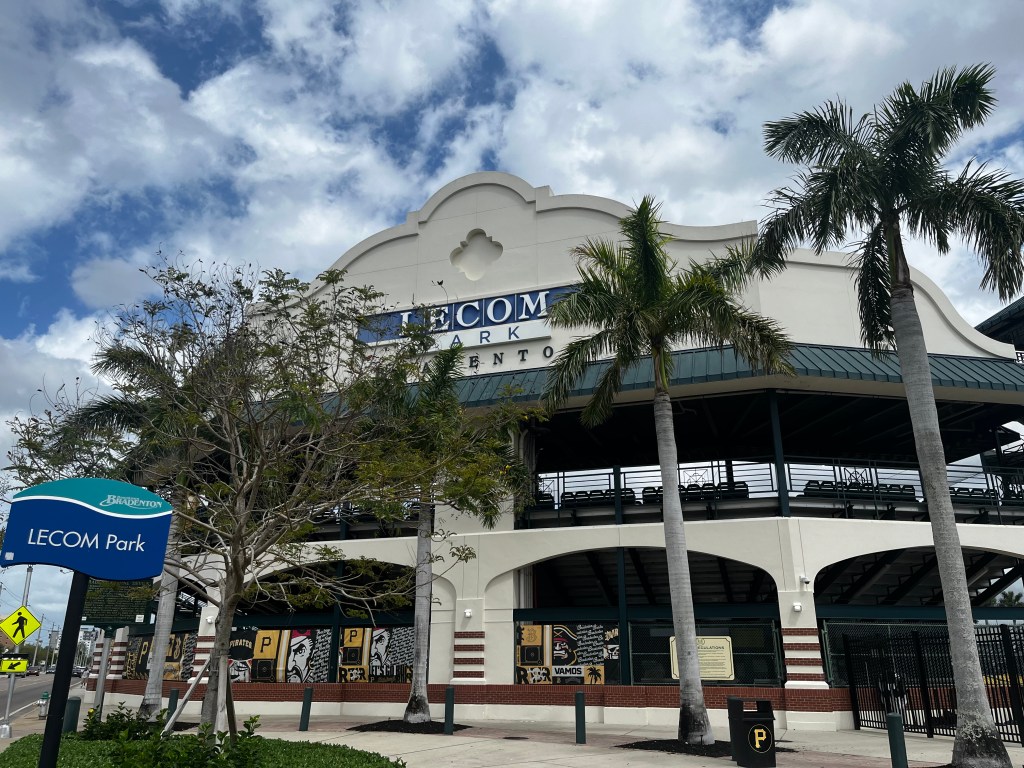
And lower down the pecking order, things haven’t changed much in recent years. Bradenton, where the Pirates have stayed for spring training since 1969, has housed a minor league club for the team since 2010. The only alteration there was was transferring from High-A to Low-A when Greensboro came into the fold and took that spot.
Since 2021, the order of Low-A Bradenton, High-A Greensboro, Double-A Altoona, and Triple-A Indianapolis has not changed. The only change to any level of minor league play in the Pirates organization is the consolidation of two stateside rookie-ball clubs into one.
The point is, things are pretty steady affiliate-wise for the Pirates. But this was not always the case. This organization’s history is filled with interesting, surprising, and at times seemingly random footholds in places all across North America.
When Major League Baseball first established Triple-A as the highest level of minor league ball in 1946, Pittsburgh’s first affiliate hailed from the film capital of the world in Hollywood, California. The team, aptly named the Stars, only had an affiliation with Pittsburgh for that season. Hollywood switched to the Chicago White Sox, and the Pirates moved it closer to Indianapolis, Indiana.
But that initial relationship with Indianapolis didn’t last all that long, either. By 1952, the Pirates had 15 minor league affiliates, but no Triple-A club. That gap lasted until the 1957 season, when the Pirates linked up with another nearby affiliate in Columbus.
The following season, the Pirates added a second Triple-A relationship with Salt Lake City, a duo that would last for three years before Pittsburgh dropped Salt Lake and ran with just the Columbus Jets. The team’s best year in tandem with the Pirates was their first after Salt Lake City was out of the picture; managed by Larry Shepard, who would later briefly lead the Pirates, the Jets went 92-62.
Until the Pirates reunited with Indianapolis starting in 2005, that Columbus partnership was the longest-running affiliation the Pirates had. But starting in 1971, Pittsburgh switched their affiliate to nearby Charleston, West Virginia.
An easier drive to the parent club, the Charlies would serve as the Triple-A affiliate for six seasons. Though the team recorded four winning seasons in those six years (including three years where Charleston was double-digit games over .500), the team suffered from instability at the manager position.
Five men managed the Charlies during Pittsburgh’s time there. Only Steve Demeter managed for more than a year, and he ironically sported the worst record of anyone on that list.
During part of the Charlies’ run, the Pirates also needed to be very clear about what affiliate they were calling from. Two years into their foray in Charleston, West Virginia, the Pirates also got a foothold into Charleston, South Carolina, where the Single-A Pirates would play beginning in 1973. The Carolina club would briefly outlast the West Virginians, when the Pirates shifted their Triple-A team back to Columbus for 1977 and 1978.
The 1978 season marked their last with any ties to the International League for quite some time. From there, the Pirates stationed their Triple-A base in Portland, Oregon for four years, where the Beavers only finished with a winning record once.
Tom Trebelhorn, an eventual big-league manager with the Milwaukee Brewers, oversaw the Beavers for that final 1982 season with the Pirates. It was Trebelhorn’s first time managing in three years and first time ever managing above the Single-A level.
When the Pirates turned their attention to Hawaii the next season, Trebelhorn went with them, and oversaw the first season of perhaps the most interesting (and certainly the farthest) affiliation in the long, storied history of the Pittsburgh Pirates.


Leave a Reply